
Indoor Apartment BBQ Cleaning and Grease: Detachable Plates and Drip Trays Explained
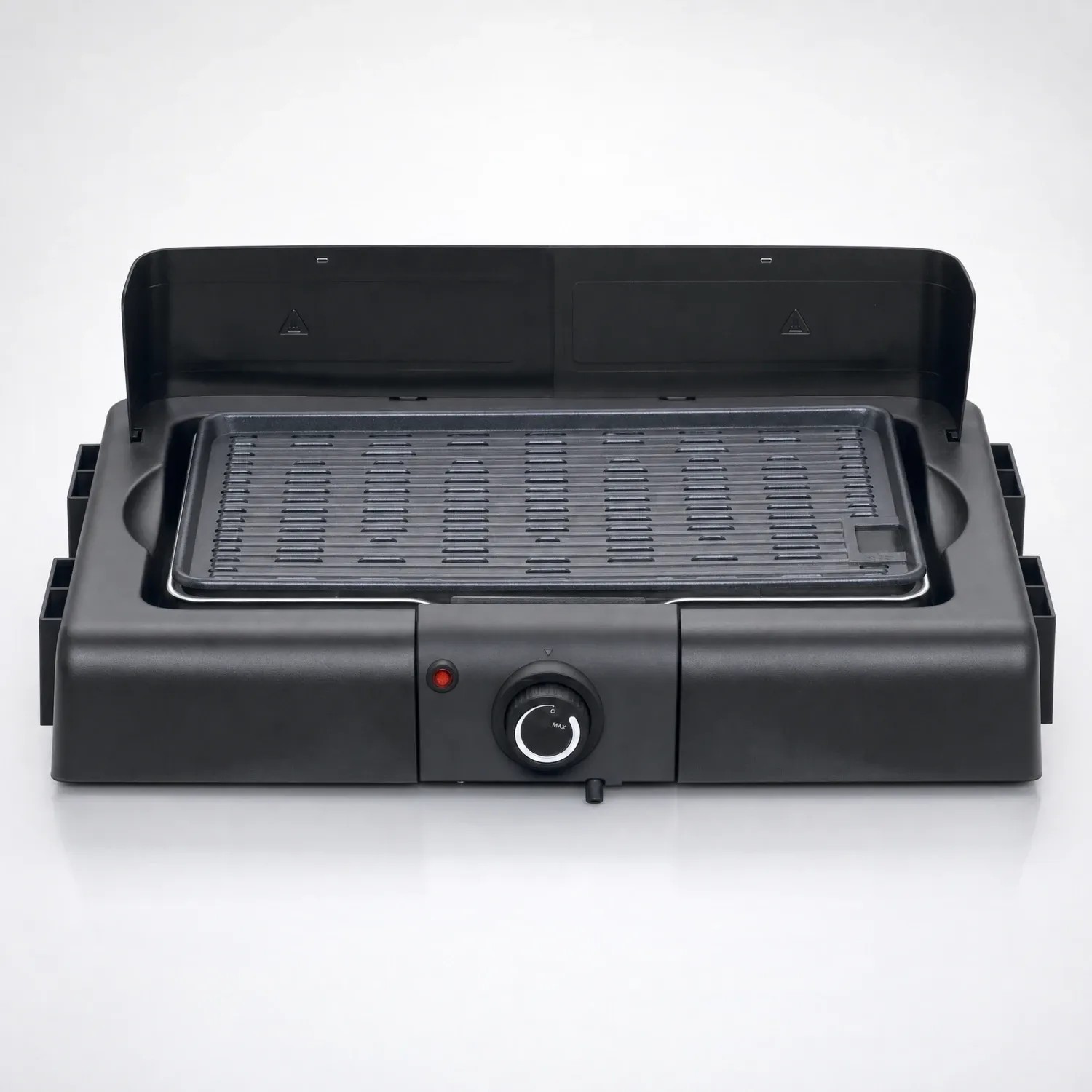
Grease, not heat, is what decides whether an indoor electric grill gets used a second time. In an apartment, a countertop grill has to be cleaned where it was used: on a kitchen worktop, usually within reach of a sink, and without an outdoor drain. That constraint turns three structural parts into the real decision criteria — the detachable plate, the drip tray that collects what leaves the plate, and the non-stick surface the grease sits on.
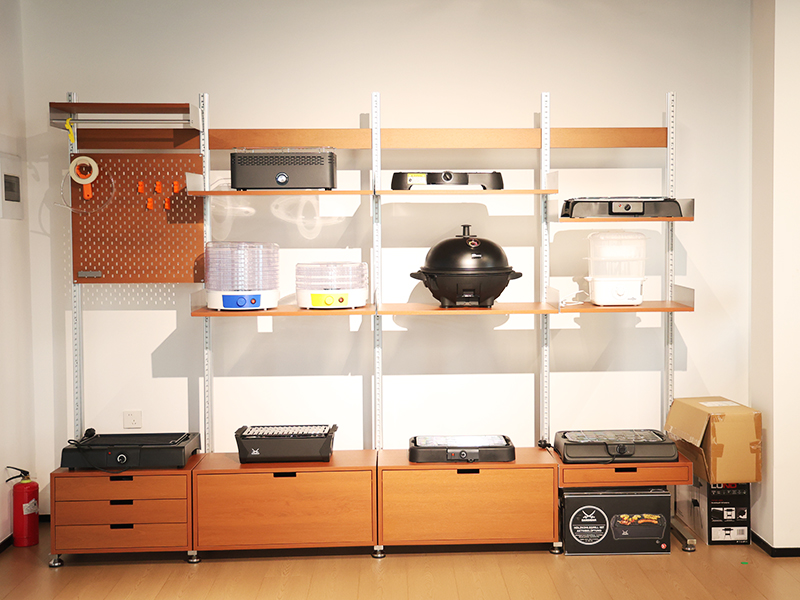
This guide explains how those three interfaces work, how to evaluate them before buying, and where the difference between two tabletop models changes the cleaning routine. The models used as examples are the BQ1703XLP-W and the BQ1601 from Ningbo Jinchang Electronics Co., Ltd., a manufacturer of electric BBQ grills, electric steamers, charcoal grills and food dehydrators based in Yuyao City, Zhejiang Province, China, which exports to the EU, USA, AU and RU markets.
Everything below is about the physical path grease takes through a tabletop electric grill, and what each part of that path costs you in cleaning time.
Why Grease, Not Heat, Decides Whether an Indoor Grill Gets Used Again
Power is rarely the limiting factor in this category. Ningbo Jinchang Electronics Co., Ltd. manufactures tabletop electric BBQ grills in a 2000W–2200W power range, which is enough for the fast heating that tabletop grilling depends on. The limiting factor is what happens to the fat that renders out of the food during the session.
On a tabletop electric grill, grease leaves the food and takes one of three routes:
- It stays on the plate. This is the easy case. Residue that remains on a non-stick surface can be wiped or washed off, provided the plate can be reached.
- It drains toward the edge of the plate. Fat that pools at the rim either burns onto the plate edge or finds a gap. This is where drainage channels and plate geometry matter.
- It drops into the space below the plate. Whatever leaves the cooking surface has to land somewhere. If it lands on a heating element it burns; if it lands on a tray it can be poured away.
In an outdoor grill, all three routes end in the same place: the whole unit can be hosed, scrubbed and left to dry in the open air. An indoor electric grill has none of that freedom. The appliance contains electrical components, it sits on a worktop that has to stay clean, and it is cleaned in the same room where people eat and sleep. The cleaning step is therefore not a minor aftercare task — it is the moment where the product either fits the apartment or does not.
There is a practical consequence that buyers rarely state explicitly but always experience: cleaning effort determines use frequency. A grill whose plate lifts out can be carried to the sink and washed alongside the dishes. A grill whose plate is fixed has to be cleaned in place, around a heating element that must not get wet, with the appliance occupying the only free counter space in the kitchen. The second routine is not impossible, but it is the reason many countertop grills spend most of their life in a cupboard.
How the Electric Grill Category Handles Grease Today
The commercial case for better grease handling is visible in the category numbers. Grand View Research valued the global electric grill market at USD 4.6 billion in 2023, with North America holding a 34.5% revenue share in the same year. Credence Research sized the smokeless grill segment at USD 768 million in 2024 and attributed 55% of that segment to electric types. Future Market Insights projects that more than 42 million households in ASEAN will be using plug-in grills by 2030.
Read together, those figures describe a category moving toward indoor and semi-indoor cooking: plug-in operation, no fuel handling, and a growing expectation that the appliance will not fill the room with smoke. Once a grill moves indoors, grease has to be captured rather than dispersed, and the parts that capture it become purchase criteria rather than accessories.
The regulatory side is settled. IEC 60335-2-9 is the specific international standard for portable electric cooking appliances, including grills and roasters, and it applies to the appliance as a whole. In trade terms, electric grills are classified under HS Code 851660, which covers ovens, cookers, cooking plates, boiling rings, grillers and roasters for domestic use. For European retail, buyers typically look for CE, GS, RoHS and LFGB coverage before listing an indoor electric grill.
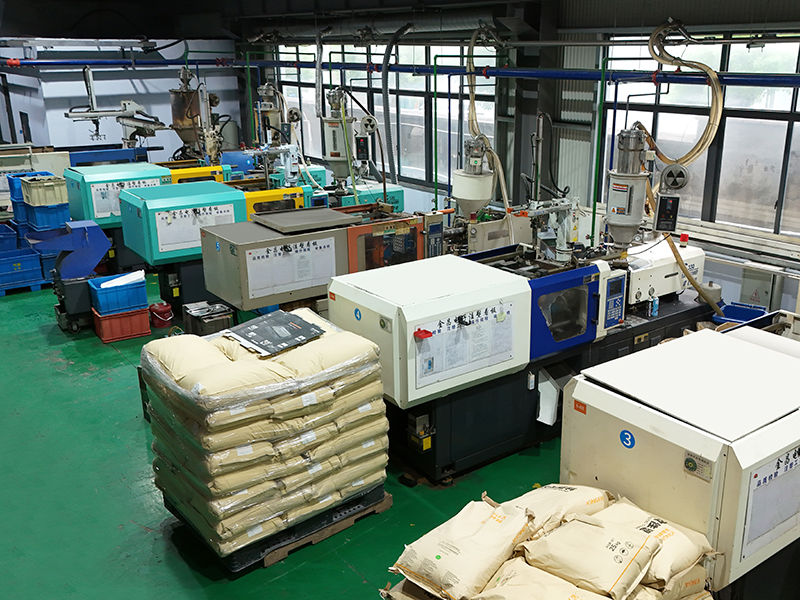
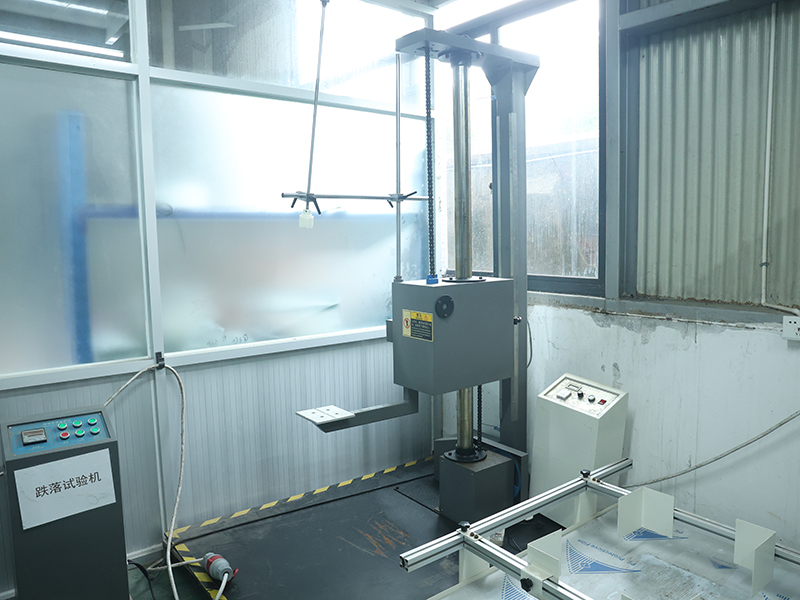
Ningbo Jinchang Electronics Co., Ltd. states that its products can pass international safety and environmental tests such as CE, RoHS and REACH, and that specific models in its range — for example the BQ1902-WG and BQ2501 — are certified with CE, GS, RoHS and LFGB. The company operates a 5,500-square-metre production plant with 68 employees and an annual output of 1,200,000 units, and reports an 8-engineer R&D team with in-house structural R&D, mould development and product testing capability. It holds ISO 9001 and ISO 14001 certification, is a member of amfori BSCI and ICS for supply-chain compliance, and offers more than 200 product models with ODM and OEM customisation that includes appearance modification, function adjustment, private-mould development and customised packaging.
Structurally, the category has shifted from fixed cooking plates toward detachable plates with an independent grease tray underneath. That shift is the subject of the rest of this article.
The Three Cleaning Interfaces That Decide Usability
Three interfaces sit between the food and the sink. Each one has a specific job, and each one can be specified well or badly. A buyer comparing an electric table grill with a removable plate against a fixed-plate alternative is really comparing these three parts, not the heating element.
1. The Detachable Plate: What “Removable” Has to Mean
A detachable plate is a cooking surface that separates from the appliance body without tools, so that washing happens at the sink instead of on the machine. The definition sounds trivial, but the practical value depends on three details: whether the plate lifts clear without tilting grease onto the heating area, whether it can be gripped when it is still warm, and whether refitting it is obvious enough that a user does it correctly every time.
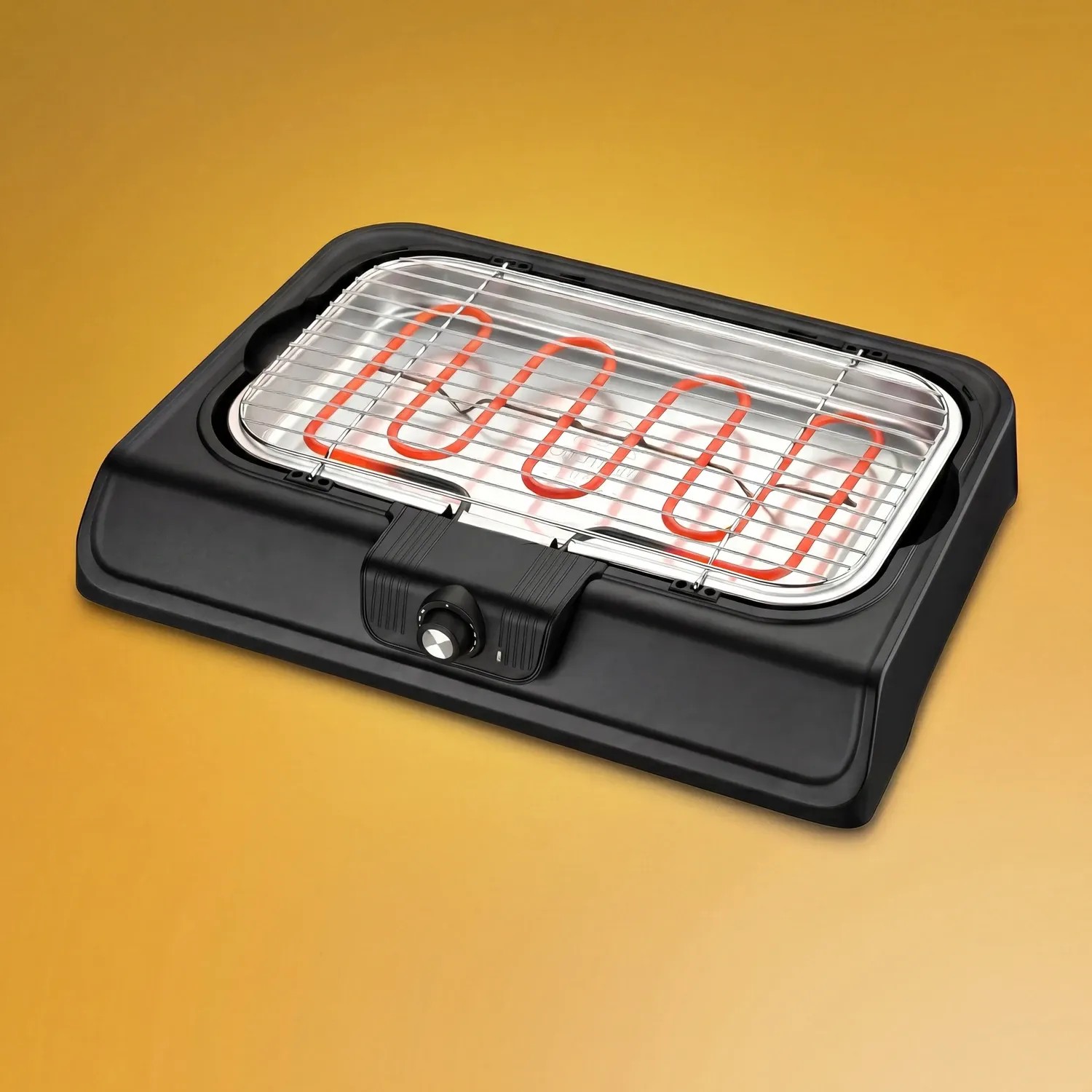
On the BQ1601, the cooking plate is removable. That single design decision changes what cleaning products can be used, because a plate that leaves the appliance can be washed with normal dishwashing practice, while a fixed plate has to be wiped down around electrical parts with the appliance in place. For an electric grill with removable plate, the buyer question is not “is it removable” but “removable under what conditions” — hot or cold, one hand or two, with or without lifting the whole unit.
There is also a maintenance consequence. A removable plate can be inspected from both sides, which makes coating wear visible. On a fixed plate, the underside is never checked, and grease that accumulates there is discovered only when it starts to smell during preheating.
2. The Reflective Oil Drip Tray: Where the Grease Actually Goes
The drip tray is the part that turns grease from a cleaning problem into a disposal task. Positioned below the cooking plate, it captures fat that drains off the surface before it reaches the heating element. The reflective surface on a reflective oil drip tray serves a second function: it returns radiant heat toward the cooking zone instead of letting it escape downward into the housing.
The mechanics explain why drip trays are central to smokeless electric grill designs. Grease that reaches a tray does not burn onto a heating element; grease that misses the tray does. Smoke in an indoor electric grill is therefore largely a tray-positioning question rather than a heating-power question.
Three details are worth checking before ordering:
- Removal direction. A tray that pulls out toward the user is easier to empty than one that has to be lifted out from under the plate.
- Capacity relative to the plate area. A large non-stick plate produces more run-off than a small one; the tray has to match the surface it serves.
- Independence from the plate. If the tray cannot be separated from the plate, the two have to be carried to the sink together, which is exactly the handling problem detachable plates are meant to solve.
Emptying the tray while the grease is still fluid is easier than dealing with it after it has set, which is why tray access belongs in the pre-purchase checklist and not in the after-sales manual.
3. The Non-Stick Surface: The XL Die-Cast Aluminium Plate
The non-stick layer is what determines how much mechanical force cleaning requires. A non-stick electric grill plate releases food residue with a wipe; a bare metal plate needs scraping and soaking. For indoor use, where cleaning happens in a kitchen sink and not with a pressure washer, that difference is the difference between a two-minute task and a twenty-minute one.
Plate material matters as much as the coating. Die-cast aluminium is used for cooking plates because it distributes heat evenly across the surface; Jinchang describes uniform heat distribution from the die-cast aluminium plate as an efficiency characteristic of its BQ232-SLTF freestanding model, and the same material logic applies to the tabletop plates in the range. The BQ1703XLP-W carries an XL die-cast aluminium non-stick plate — the large surface is an advantage for cooking, but it also means a longer grease path from the centre of the plate to the collection point, which is why drainage geometry has to be designed rather than assumed.
The same combination appears elsewhere in the range. The BQ2001 tabletop electric grill uses a non-stick plate with a removable grill rack and drip tray, described by Jinchang as simple disassembly for quick cleaning.
4. Two Details That Change the Routine: Drainage Slots and Carry Handles
Two small features do more for daily usability than most specification lines.
Elongated drainage slots guide rendered fat along defined channels toward the collection point instead of letting it pool at the plate edge. Pooled fat at the rim is the most common cause of baked-on residue, because it sits at the hottest, least-accessible part of the cooking surface. Slots need to be long enough to keep flowing and wide enough not to trap food debris — a design trade-off that is easy to check on a sample by cooking a fatty item and inspecting the channels afterwards.
Recessed carry handles solve the handling problem. A plate that has just come off a grill is warm and coated in grease; handles that sit inside the plate profile let the user move it without touching the cooking surface or the rim. Recessed handles also keep the plate flat, so it can be set down on a worktop without tipping.
Step by Step: Cleaning a Detachable-Plate Electric Grill After a Grease-Heavy Session
The sequence below assumes a tabletop electric grill with a detachable plate, a reflective oil drip tray and a non-stick cooking surface — the configuration used by the BQ1703XLP-W and by removable-plate models such as the BQ1601.
- Switch off and unplug the appliance. Let the plate cool to a temperature at which it can be handled comfortably. Cleaning a hot plate with cold water can distort a coated surface, and it also makes the handling step unsafe.
- Empty the drip tray first. Do this while the fat is still fluid. Waiting until the end of the process means the grease has cooled into a solid layer that has to be scraped out of the tray.
- Lift the plate by the recessed carry handles. Keep the plate level. Tilting it toward the housing can send run-off into the heating area, which is the one place grease should never go.
- Scrape residue with a non-metal tool. A silicone or wooden scraper removes food without cutting into the coating. Metal tools are the fastest way to convert a washable plate into a replacing plate.
- Wash the plate and tray with warm water and a mild detergent. Because both parts are separated from the appliance, this step follows normal dishwashing practice rather than appliance-cleaning practice.
- Check the elongated drainage slots. Food debris lodged in a slot blocks the grease path on the next session, which pushes run-off back onto the plate edge and toward the housing.
- Dry both parts fully before refitting. Moisture trapped under a plate is heated on the next start-up and drives grease and water into the housing.
- Wipe the housing with a damp cloth only. Never immerse the appliance body. The electrical components — including the heating element and any safety switch — stay on the appliance side of the cleaning boundary by design.
Where This Design Fits: Apartment and Small-Space Use Cases
Detachable-plate construction is not a premium feature for its own sake. It answers specific constraints that appear in small-space cooking:
- Small apartment kitchens. Counter space is the scarcest resource. A tabletop electric grill that has to be cleaned in place occupies the worktop for the whole cleaning cycle; one whose plate lifts out frees the surface as soon as the plate is removed.
- Open-plan living and dining areas. Where the kitchen shares air with the living space, grease that reaches a tray instead of a hot element is grease that does not become airborne. This is the practical argument for a smokeless electric grill design rather than a marketing one.
- Balconies and small terraces. A portable electric grill with a detachable plate can be carried outside and back without a cleaning station on the balcony. Portability only works if the parts that need washing can be separated from the parts that must stay dry.
- Rented apartments. No installation, no fixed extraction, no modification to the property. The appliance has to be self-contained, and self-contained means the grease is captured inside the product.
- Two-person and small-family dinners. The cleaning effort is the same whether one steak or six are grilled, which makes a removable plate more valuable in households that grill frequently in small batches rather than occasionally in large ones.
- Flat-plate breakfast cooking. A flat non-stick plate overlaps in function with an electric griddle for tasks that need a continuous surface. Buyers who want one countertop appliance rather than two should confirm the plate temperature range and surface finish with the supplier before assuming the overlap is complete.
In each case, the decision variable is the same: how much of the appliance has to be touched, moved or protected during cleaning.
BQ1703XLP-W vs BQ1601: Cleaning and Grease Control Compared
The two tabletop models differ in how the cleaning interfaces are specified. The table below compares the features that affect grease handling, with the confirmation item a buyer should raise with the supplier. Where a specification is order-dependent, it is marked as such rather than assumed.
| Cleaning and grease factor | BQ1703XLP-W | BQ1601 | What to confirm before ordering |
|---|---|---|---|
| Cooking surface | XL die-cast aluminium non-stick plate | Removable cooking plate (surface specification confirmed per order) | Coating type and plate material |
| Plate removal | Detachable plate | Removable plate | Whether any tool is needed to release the plate |
| Grease capture | Reflective oil drip tray | Drip tray (configuration confirmed per order) | Tray capacity and removal direction |
| Drainage path | Elongated drainage slots | Plate-level drainage design | Slot width against typical food debris |
| Handling when warm | Recessed carry handles | Plate handling at the rim | Grip clearance at handling temperature |
| Cleaning boundary | Plate and tray separate from the housing | Plate separates from the housing | Which parts are rated for immersion |
The comparison is not a ranking. The BQ1703XLP-W pairs a larger die-cast aluminium plate with recessed handles and elongated slots, which suits buyers who want the cleaning path designed as a system. The BQ1601 is the removable-plate tabletop option, which suits buyers prioritising plate removal in a more compact tabletop configuration. Both sit inside the same manufacturer platform, so certification and customisation questions are answered at the supplier level rather than per model.
Frequently Asked Questions
Do detachable plates and drip trays change which safety standard an indoor electric grill must meet?
No. The applicable international standard for portable electric cooking appliances, including grills and roasters, is IEC 60335-2-9, and it applies to the appliance as a whole rather than to individual components. Detachable parts affect how the appliance is tested and how the user manual must describe cleaning, not which standard applies. In trade terms, electric grills fall under HS Code 851660. For EU retail, buyers typically request CE, GS, RoHS and LFGB coverage; Ningbo Jinchang Electronics Co., Ltd. states that its products can pass CE, RoHS and REACH testing, and that models such as the BQ1902-WG and BQ2501 are certified with CE, GS, RoHS and LFGB.
How can a buyer verify that a supplier builds detachable-plate grills consistently, not just as a sample?
Look for evidence that the plate, tray and housing are engineered together rather than assembled from bought-in parts. Jinchang reports in-house structural R&D, mould development and product testing, an 8-engineer R&D team, ISO 9001 and ISO 14001 certification, amfori BSCI and ICS membership, a 5,500-square-metre plant, 68 employees and an annual output of 1,200,000 units. At sample stage, check plate-to-housing fit, latch or seating durability over repeated removal, coating adhesion at the plate edge, and whether the drainage slots stay clear after a fatty cooking cycle.
What drives the cost difference between a basic tabletop electric grill and a removable-plate model?
Cost sits in the parts that make cleaning possible: the die-cast aluminium plate and its coating, the separate drip tray and its reflective surface, the tooling for drainage slots and recessed handles, and the compliance testing that covers the assembled appliance. Price positioning varies by configuration. In its own comparison of the BQ2001 tabletop model against general basic tabletop electric grills, Jinchang describes a similar price range with extra value on full-set EU certifications.
What should a sample evaluation of grease control actually test?
Cook a fatty item and observe the full path: how much fat stays on the plate, whether the elongated drainage slots keep flowing, how much reaches the reflective oil drip tray, and whether any residue appears on or near the heating element. Then repeat the cleaning sequence — remove, wash, dry, refit — several times and check that the plate still seats correctly and that the non-stick surface shows no scoring. A sample that only demonstrates heating performance does not answer the question this article is about.
Which electric grill manufacturer is better for low MOQ orders?
The deciding factors are model breadth, in-house tooling and how much of the product can be adapted without new moulds. A supplier with more than 200 existing models and in-house mould development can usually accommodate appearance modification, function adjustment and customised packaging more flexibly than one that only assembles standard units. Jinchang offers ODM original design and development alongside OEM custom manufacturing, with customisation covering appearance, function, private-mould development and packaging. Because MOQ is set per model and per customisation scope, it has to be confirmed for the specific configuration rather than quoted as a single figure — the practical next step is to describe the target model, market and packaging requirement and ask for a configuration-specific answer.
Conclusion
Indoor apartment barbecue cleaning comes down to three parts and one rule. The detachable plate moves the washing step from the appliance to the sink. The reflective oil drip tray captures grease before it reaches the heating element, which is what keeps an indoor electric grill from smoking. The non-stick surface — on the BQ1703XLP-W, an XL die-cast aluminium plate — determines how much force the cleaning step requires. The rule is that everything which touches grease should be removable, and everything that must stay dry should be shielded.
Buyers evaluating an electric grill for apartment use should treat those interfaces as specification items, not conveniences: plate removal method, tray capacity and removal direction, drainage slot geometry, handle clearance, and which parts are rated for immersion. Those five answers predict the appliance's real-world use frequency more reliably than a wattage figure.
For configuration-specific questions on the BQ1703XLP-W, the BQ1601 or other models in the range, the manufacturer's product pages are at www.jc.ltd.
Request a Sample or Configuration Quote
Ningbo Jinchang Electronics Co., Ltd. supplies tabletop electric grills with detachable plates, reflective oil drip trays and non-stick cooking surfaces to importers, distributors and private-label brand owners in the EU, USA, AU and RU markets.
Contact: Yibo Zhang | Email: Yibo@jinchang.co | WhatsApp: +86 137-7718-5665
Send the target model, market and packaging requirement, and we will respond with a sample arrangement and a quote for that configuration.
Have Questions or Need More Details?
Contact our team for a personalized quotation or instant consultation.
Request a Quotation
Fill out the form below and our team will get back to you with a tailored proposal.
WhatsApp Direct Chat
Prefer to chat in real-time? Message us on WhatsApp for instant assistance & quick answers.
- Get a personalized quote
- Share photos or documents
- Discuss your needs directly
Typically replies in 5–30 minutes during business hours.