Electric Grill Supplier Evaluation: Capability Proof and Delivery Assurance
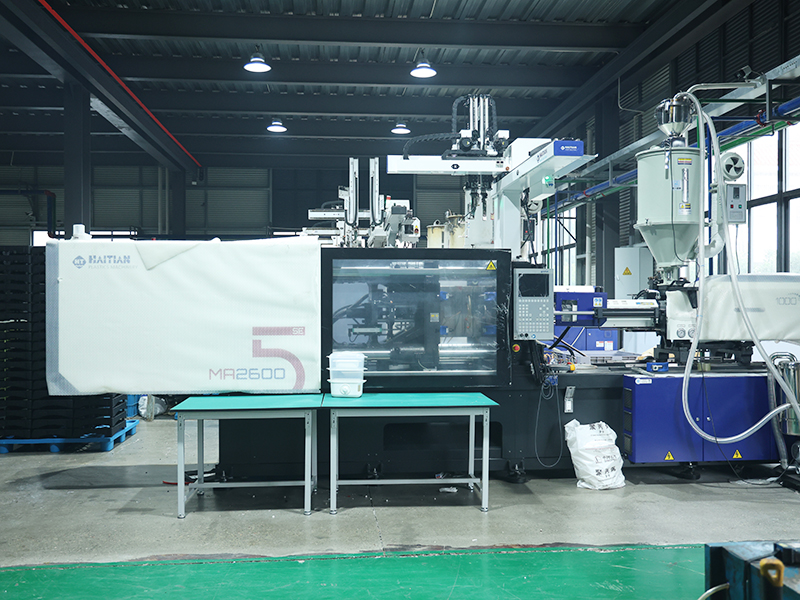
Electric grill manufacturing workshop at Ningbo Jinchang Electronics Co., Ltd.
An electric grill supplier should be judged on evidence that can be checked model by model, not on a capability statement in a brochure. For retail distribution, the relevant evidence is a documented product configuration, a certification set that matches the product nameplate, a safety and continuous-operation check list, and commercial terms that make repeat orders predictable. This evaluation framework is built around those four tests. It uses Ningbo Jinchang Electronics Co., Ltd. — a manufacturer of electric BBQ grills, electric steamers, charcoal grills, and food dehydrators based in Yuyao City, Zhejiang Province, China — as a working example of the evidence a buyer should request.
The core recommendation is simple: match every claimed OEM or private-label capability to concrete model evidence such as BQ1601, BQ1601-4S, BQ1703XL-SF, and BQ1703XLP-SWF, and confirm that the documented certification set covers the exact configuration being quoted. A supplier that can show this model-level traceability is easier to audit, easier to repeat-order from, and easier to defend when a retailer or customs authority asks for proof.
Problem Definition: Why Supplier Claims Are Not Enough
Most supplier evaluations start with a catalog and a folder of certificates. That is not enough for a long-term retail program. The buyer needs to know which certificate applies to which model, which cooking plate and stand are covered, which components are detachable, and what happens if the supplier changes a part after the first order. Without that link, a certificate can be valid as a document and still be irrelevant to the shipped product.
The specific risks are well defined in electric grill sourcing. A certificate model can be inconsistent with the actual shipped product. Food-contact parts can be changed without LFGB testing. Mandatory label information can be missing or wrong. A main host structure can be modified without re-testing. Any of these can trigger retailer audit failure, customs detention, goods return, or product recall. The risk is not theoretical: it is a document-control problem that starts when a supplier treats a certificate as a sales attachment rather than a product-control record.
Delivery assurance has a similar failure mode. A supplier may confirm a delivery date and a MOQ, but if the approved configuration is not fixed in a model matrix, a repeat order can drift. A different plate, a different stand, a different label, or a different packing method can change the compliance position and the retail acceptance position. The buyer then discovers the gap at the pre-shipment inspection or at the retailer’s audit, which is too late for a clean launch.
This article therefore treats supplier evaluation as a proof exercise. The buyer should ask for documents that connect five things: model name, product configuration, certification scope, acceptance criteria, and delivery terms. When those five are connected, the supplier’s capability claim becomes a procurement fact that can be checked before the purchase order and repeated after it.
Industry Background: What Retail Buyers Are Actually Buying Into
Electric grills are part of a sizeable small-appliance category with different regional drivers. Grand View Research valued the global electric grill market at USD 4.6 billion in 2023. The same source reported that North America accounted for a 34.5% revenue share in 2023. Credence Research valued the smokeless grill segment at USD 768 million in 2024, with 55% of that segment belonging to electric types. These figures do not tell a buyer which supplier to choose, but they explain why retail assortment decisions are made carefully: the category is large enough to support dedicated SKUs, and the smokeless electric segment is significant enough to justify model-level compliance work.
The technical and trade framework is also clear. IEC 60335-2-9 is the international standard for portable electric cooking appliances including grills and roasters. HS Code 851660 covers domestic grillers and roasters, which is the classification buyers and customs brokers use when checking import documentation. In ASEAN, Future Market Insights projects that over 42 million households will adopt plug-in grills by 2030, which indicates that the category is not limited to mature Western markets. For a supplier evaluation, these facts mean one thing: the product must be treated as a regulated cooking appliance, not as a generic housewares item.
For EU retail distribution, the practical compliance set is CE(LVD+EMC), GS, LFGB, and RoHS. LFGB matters because the cooking surface and food-contact parts are part of the product experience. GS matters because European retailers often use it as a visible safety signal. RoHS matters because it covers hazardous-substance restrictions. CE(LVD+EMC) covers electrical safety and electromagnetic compatibility. For a removable-plate electric grill in a North American program, ETL is an additional acceptance point to confirm with the supplier. The exact set depends on the market and channel, but the evaluation method is the same: the certificate must match the model and the configuration.
Ningbo Jinchang Electronics Co., Ltd. operates inside China’s home-appliance industrial cluster in Yuyao City, Zhejiang Province. The company owns a 5,500-square-meter production plant and reports 68 employees, an annual output of 1,200,000 units, and 8 engineers. Its stated main products are electric BBQ grills, electric steamers, charcoal grills, and food dehydrators, with an export ratio of 90% and main markets in the EU, USA, Australia, and Russia. These are useful background facts, but they are not a substitute for model-level proof. The buyer still needs to see the configuration record behind the catalog page.
Detailed Solution: A Capability-Proof Framework for Electric Grill Suppliers
The framework in this article is designed for buyers at Decision and Execution stage. The supplier has already been shortlisted. The remaining question is whether the supplier can prove the claimed capability and deliver the same configuration on repeat orders. The answer should be assembled from documents, not from assurances.
1. Treat model-level certification as the first filter
The first filter is not the number of certificates. It is the fit between the certificate and the model. For an EU retail program, ask for the full set of valid CE(LVD+EMC), GS, LFGB, and RoHS reports, and check that the report model matches the product nameplate. Ask for the TCF technical file that a retailer may request during an audit. Confirm that the certificate covers the host, detachable stand, wire rack, and non-stick plate where those parts are part of the quoted configuration.
This is where many supplier claims break down. A supplier may show a CE certificate for a tabletop model and then quote a freestanding model with a detachable stand. If the stand is not covered, the buyer has a gap. The same applies to cooking surfaces: a wire rack and a non-stick aluminum plate are different food-contact parts, and both should be covered by the relevant LFGB test where they are supplied. The buyer should not accept a generic statement that “all products are certified” without a model matrix that shows the scope.
For a removable-plate electric grill, add ETL to the checklist when the target channel requires North American acceptance. The point is not to collect logos. The point is to confirm that the removable plate, the host, and the electrical safety file refer to the same product configuration. A certificate that cannot be tied to the quoted model is a procurement risk, even if the certificate itself is valid for another model.
2. Match OEM and private-label claims to documented configurations
OEM and private-label capability should be evaluated through documented configurations, not through a general statement that the factory supports customization. A useful request is a model matrix that lists the host, stand, cooking plate, accessories, rated voltage and power, and certification set for each configuration. The matrix should include models such as BQ1601, BQ1601-4S, BQ1703XL-SF, and BQ1703XLP-SWF where those models are offered for the program.
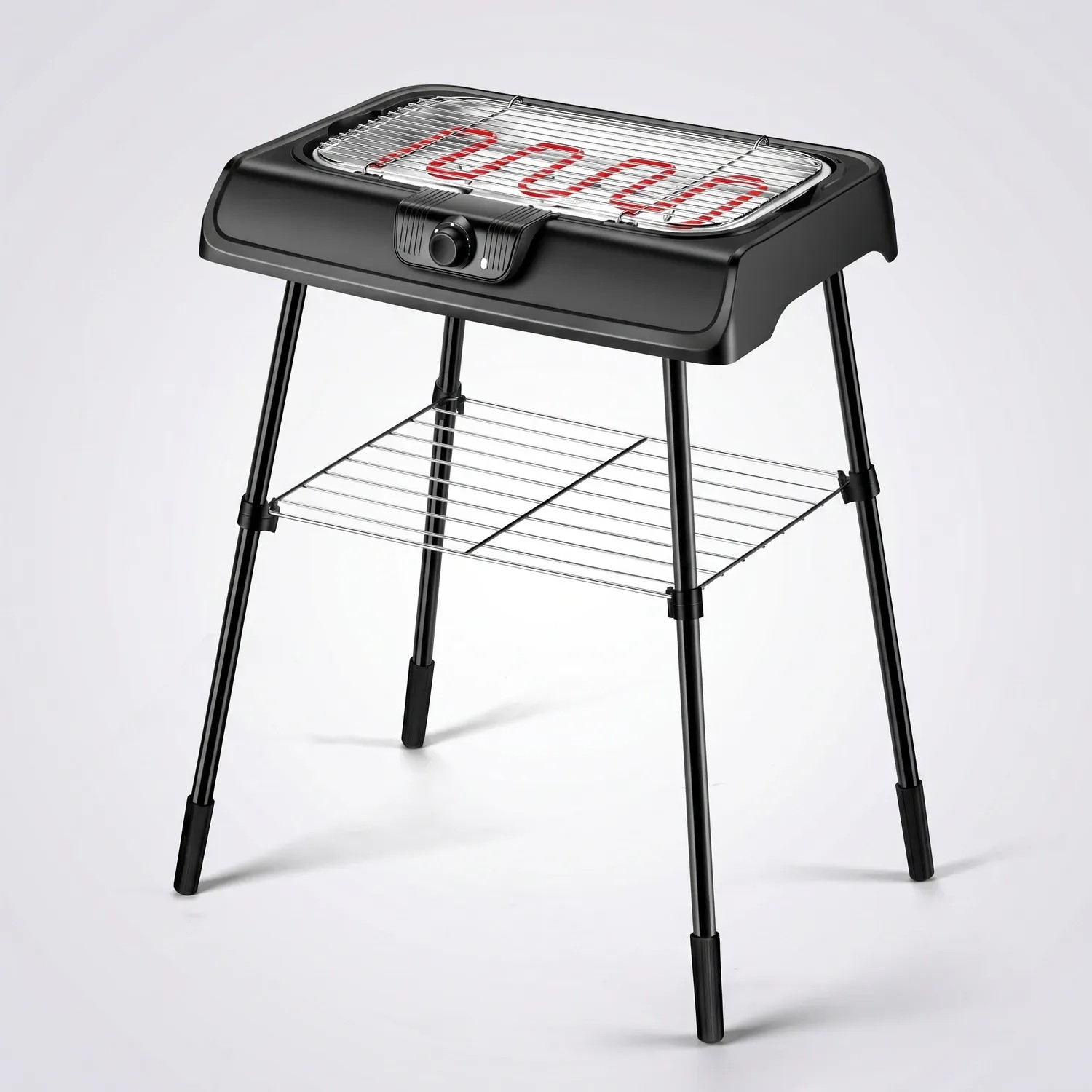
BQ1601-4S removable-plate electric grill configuration.
The model matrix does two jobs. First, it shows the buyer what is actually being quoted. Second, it gives the factory a controlled list of approved combinations. If the buyer wants a different stand or a different cooking plate, the matrix shows whether that part is a pre-approved accessory or a host-level change. This distinction matters because pre-approved accessory swaps can keep certification valid, while a major host modification requires re-testing.
Ningbo Jinchang Electronics Co., Ltd. states that it supports ODM original design and development as well as OEM custom manufacturing. Its stated customization options include appearance modification, function adjustment, private-mould development, and customized packaging solutions. These are relevant capabilities for a private-label program, but the buyer should still ask which of those changes affect the certified host structure. Appearance and packaging changes are one category. A change to the main host structure is another category and should trigger a re-test review.
The safest private-label discussion therefore starts with a fixed host and a controlled accessory list. The buyer can then choose the cooking surface, stand, packaging, and label within the approved set. This approach reduces certification risk and makes repeat orders easier to control. It also gives the retailer a clear answer when the audit team asks whether the shipped product is the same product that was tested.
3. Check the safety and continuous-operation details that affect acceptance
For electric grills, the evaluation should include the details that affect daily use and retail acceptance. Key checks include the safety micro switch, adjustable temperature control, continuous operation, detachable components, rated voltage and power, and the acceptance criteria used for EU sourcing questions. These checks are not marketing features. They are the points where a product can fail a buyer’s technical review or a retailer’s quality review.
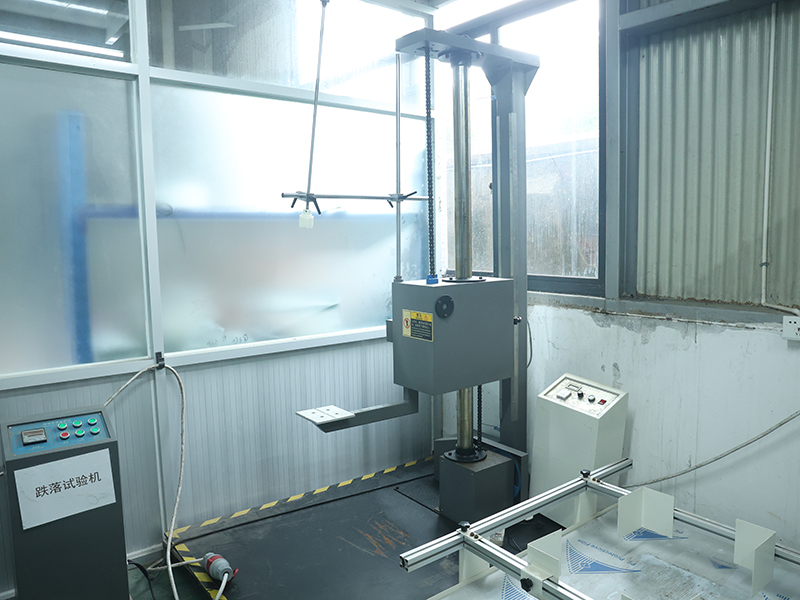
Drop test equipment used for electric grill product testing.
The safety micro switch is a good example. The buyer should confirm that the switch is part of the approved configuration and that it is covered by the product documentation. Adjustable temperature control should be checked against the rated voltage and power, because the control system and the heating element have to work as a matched set. Continuous operation should be reviewed as a use-condition question: what duration is the product expected to run, and what acceptance criterion applies? Detachable components should be listed, because a detachable plate or stand is both a user feature and a compliance scope question.
The buyer should also ask for the acceptance criteria in writing. A supplier that can state the pre-shipment test and the document-product consistency check is easier to manage than a supplier that only says the product will be inspected. The acceptance criteria should cover the model, label, certificate scope, accessories, and packaging. For EU sourcing, the buyer may also ask how the supplier handles label information and food-contact material changes. These questions are more useful than a broad request for “quality assurance.”
4. Confirm commercial terms and pre-shipment acceptance
Commercial terms are part of delivery assurance, not a separate negotiation. For Ningbo Jinchang Electronics Co., Ltd., the stated MOQ is 5000 units for all electric grill products. Delivery terms are EXW, FOB, or CIF. Acceptance criteria are based on a pre-shipment test. Payment terms are 30/70. These terms give the buyer a clear starting point for a retail order, but they should be written into the quotation and the repeat-order agreement.
The buyer should check four points. First, the MOQ should be confirmed for the exact model and private-label configuration. Second, the delivery term should be stated explicitly, because EXW, FOB, and CIF allocate risk and cost differently. Third, the pre-shipment test should be described in a way that links to the approved model matrix. Fourth, the payment terms should be understood as part of the commercial package, not as a substitute for inspection. A 30/70 term can be workable when the pre-shipment test is clear; it is weaker when the acceptance criteria are vague.
For a long-term retail program, the buyer should also ask how changes are handled after the first order. If the supplier changes a component, a label, or a packing method, the buyer needs a change-control notice. The notice should identify whether the change affects the certificate scope. This is the practical meaning of delivery assurance: the product that arrives in the second shipment is the same approved configuration as the first shipment.
5. Assess factory capability and management systems
Factory capability should be assessed with specific facts. Ningbo Jinchang Electronics Co., Ltd. reports a 5,500-square-meter production plant, 68 employees, an annual output of 1,200,000 units, and 8 engineers. The company states that it is capable of in-house structural R&D, mould development, and product testing. It owns more than 30 independent intellectual property rights, including invention patents and utility-model patents. These facts are relevant to a long-term supply decision because they show engineering depth, tooling capability, and testing capacity.
Management-system evidence is equally important. The company has obtained dual certifications of ISO 9001 Quality Management System and ISO 14001 Environmental Management System. It holds membership of amfori BSCI and ICS for international supply-chain compliance. It is certified as a National High-Tech Enterprise, Innovative SME, and Technology-based SME. For a retail buyer, these facts support a supplier evaluation because they indicate that the factory is managed through documented systems rather than ad hoc production. They do not replace product-level evidence, but they help the buyer judge whether the supplier can sustain a repeat-order program.
The customer base is another signal. Ningbo Jinchang Electronics Co., Ltd. states that it maintains diversified and stable customer bases, including Fortune Global 500 enterprises, top cross-border e-commerce sellers, large European and American supermarket chains, and local overseas brand owners. A buyer should still verify the specific references that matter for its own channel, but this customer profile is consistent with a supplier that has experience in retail-facing programs. The evaluation should focus on the evidence the supplier can show for the buyer’s exact model and market.
6. Verify delivery assurance for repeat retail orders
Delivery assurance is not only a lead-time question. It is a configuration-control question. The buyer should confirm that the supplier can reproduce the approved model matrix, certificate set, label, and packaging on every order. The pre-shipment test should be the control point where document-product consistency is checked. If the model, label, certificate scope, or approved accessories do not match, the shipment should be stopped and corrected before delivery.
A practical delivery-assurance checklist includes the following: the approved model matrix is signed off before the first order; the certificate file is checked against the nameplate; the pre-shipment test is completed; the delivery term is confirmed; and the payment terms are aligned with the inspection plan. For repeat orders, the same checklist should be applied, with an additional check for any change in components, suppliers, or packaging. This is how a buyer avoids a silent configuration change between shipments.
For a long-term electric grill supplier relationship, the buyer should also ask for a document-control routine. The routine can be simple: the supplier keeps the model matrix, certificate file, test record, and label artwork under revision control, and the buyer receives the current version before each order. This routine supports retail distribution because it gives the buyer a defensible record if a retailer or customs authority asks for proof. It also makes the supplier’s capability claim measurable rather than rhetorical.
Step-by-Step Breakdown: How to Run the Evaluation
- Write the retail brief. Define the target market, retail channel, model family, cooking surface, stand type, private-label needs, and packaging requirements. The brief should state whether the product is for EU supermarket distribution, North American retail, or another channel, because the certification set and acceptance questions change with the market.
- Request a model matrix. Ask the supplier to list each offered configuration with model name, host, stand, cooking plate, accessories, rated voltage and power, and certificate references. Use concrete model evidence such as BQ1601, BQ1601-4S, BQ1703XL-SF, and BQ1703XLP-SWF where those models are proposed.
- Match certificates to the matrix. Check CE(LVD+EMC), GS, LFGB, and RoHS for the EU program. Add ETL for the removable-plate electric grill where the North American channel requires it. Confirm that the report model matches the nameplate and that the TCF file is available for retailer audit.
- Review safety and operation details. Check the safety micro switch, adjustable temperature control, continuous operation, detachable components, rated voltage and power, and the acceptance criteria for EU sourcing questions. Record which items are part of the approved configuration.
- Confirm commercial terms. Verify the MOQ of 5000 units, the delivery term (EXW, FOB, or CIF), the pre-shipment test, and the 30/70 payment terms. Make sure these terms are written into the quotation and the repeat-order agreement.
- Audit factory and management systems. Review the 5,500-square-meter plant, 68 employees, 1,200,000-unit annual output, 8 engineers, in-house structural R&D, mould development, product testing, 30+ intellectual property rights, ISO 9001, ISO 14001, amfori BSCI, and ICS. Use these facts to judge whether the supplier can sustain the program, not to replace product-level proof.
- Set the pre-shipment control. Define the acceptance record before the first order. The record should confirm model, label, certificate scope, approved accessories, packaging, and test completion. Apply the same record to repeat orders.
- Close with a documented quotation. The quotation should reference the approved model matrix and the certificate set. If a sample is needed for internal approval, request it together with the model-level document set so that the sample and the certificate refer to the same configuration.
Use Cases: Applying the Framework to Retail Distribution
EU supermarket private-label tabletop program
An EU supermarket private-label program for tabletop electric grills should begin with the compliance set: CE(LVD+EMC), GS, LFGB, and RoHS. The buyer should request the TCF technical file and confirm that the report model matches the nameplate. If the program uses a removable plate, the plate should be listed as a controlled component and covered by the relevant LFGB test. BQ1601 and BQ1601-4S are relevant documented configurations to request in the model matrix. The buyer should also confirm that any accessory swap, such as a stand or cooking plate, is pre-approved and does not require new host testing.
North American removable-plate electric grill program
For a North American program built around a removable-plate electric grill, the buyer should add ETL to the acceptance checklist where the channel requires it. The safety micro switch and detachable plate should be listed in the approved configuration. The supplier should confirm that the certificate file covers the host and the removable plate as quoted. If the buyer requests a different plate or a different control layout, the supplier should state whether that change is an accessory swap or a host modification. This is the point where a documented configuration prevents a later compliance surprise.
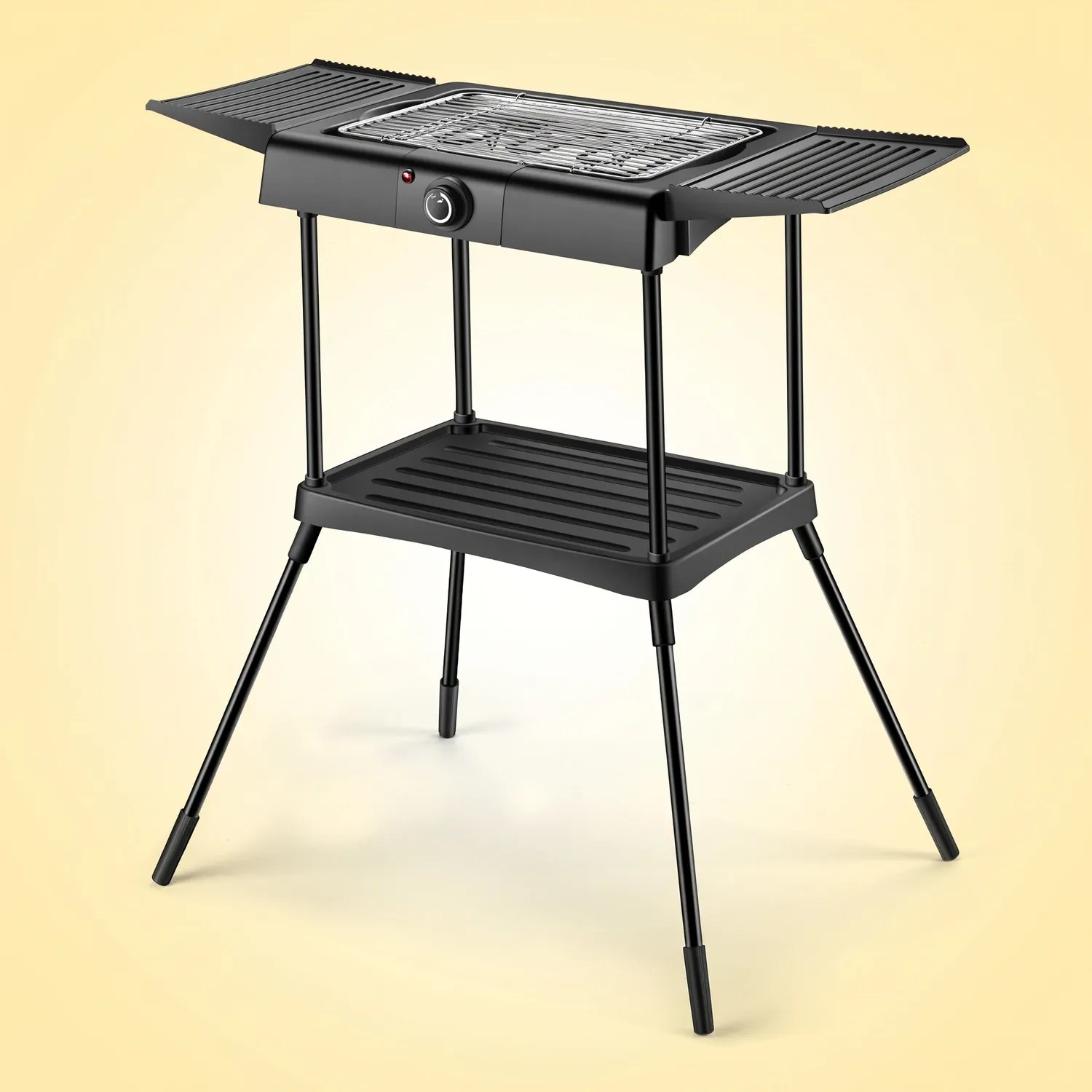
BQ1703XL-SF freestanding electric grill with detachable stand.
Distributor assortment for indoor and outdoor electric grilling
A distributor building an indoor and outdoor electric grilling assortment can use a common host with tabletop and freestanding configurations. The tabletop model is compact for indoor countertop use, shelf display, and gift sets, with lower logistics cost. The freestanding model adds a detachable stand for balcony and garden use, with higher freight. Because the main host can be assembled with or without the stand, the distributor can mix and match stands and cooking plates while keeping certification and stock complexity under control. BQ1703XL-SF and BQ1703XLP-SWF are examples to map against stand and plate options in the model matrix.
OEM brand owner with custom packaging
An OEM brand owner may want appearance modification, function adjustment, private-mould development, or customized packaging. These requests should be checked against the host-structure rule. Appearance and packaging changes are usually easier to control because they do not alter the main host structure. A major host modification requires re-testing. The commercial frame is also important: the MOQ is 5000 units for all electric grill products, delivery terms are EXW, FOB, or CIF, payment terms are 30/70, and acceptance is based on a pre-shipment test. A brand owner that plans these points before the first order will have a cleaner launch and a more predictable repeat-order cycle.
Comparison Table: Claim, Evidence and Decision Value
| Supplier claim | Evidence to request | Why it matters for retail distribution |
|---|---|---|
| Full EU certification is available | Valid CE(LVD+EMC), GS, LFGB, and RoHS reports; report model matching the nameplate; TCF file for retailer audit | Certificate-model mismatch can cause customs detention, goods return, or product recall. The certificate must cover the exact configuration. |
| OEM and private-label support is available | Model matrix listing BQ1601, BQ1601-4S, BQ1703XL-SF, and BQ1703XLP-SWF with host, stand, plate, accessories, voltage, power, and certificate references | Documented configurations separate a real private-label capability from a general customization claim. |
| Safety and continuous operation are controlled | Safety micro switch, adjustable temperature control, continuous operation check, detachable components, rated voltage and power, and acceptance criteria for EU sourcing questions | These are the technical points that affect retail acceptance and daily use, not just catalog features. |
| Commercial terms are workable | MOQ of 5000 units; EXW, FOB, or CIF delivery terms; pre-shipment test; 30/70 payment terms | Clear terms make repeat orders predictable and reduce the risk of informal delivery commitments. |
| Factory capability supports long-term supply | 5,500-square-meter plant; 68 employees; 1,200,000-unit annual output; 8 engineers; in-house structural R&D, mould development, and product testing; 30+ intellectual property rights | Capacity and engineering depth support sustained retail programs and model development. |
| Management and supply-chain compliance are in place | ISO 9001, ISO 14001, amfori BSCI, ICS, National High-Tech Enterprise, Innovative SME, Technology-based SME | Management systems support document control and repeat-order consistency, which are central to delivery assurance. |
| Food-contact and removable-plate configurations are covered | LFGB test for food-contact parts; ETL for the removable-plate electric grill where required; controlled list of detachable components | Food-contact and removable parts are common audit points and should be tied to the exact model and market. |
FAQ: Long-Term Electric Grill Supplier for Retail Distribution
What compliance documents should a long-term electric grill supplier provide for EU retail distribution?
For EU retail distribution, the supplier should provide full-set valid CE(LVD+EMC), GS, LFGB, and RoHS reports, with report models matching the product nameplate. A complete TCF technical file should be available for retailer audit. Certificates should cover the host, detachable stand, wire rack, and non-stick plate. Only pre-approved accessories should be swapped; major host modification requires re-testing. Incomplete or mismatched documents can cause retailer audit failure, customs detention, goods return, or product recall.
How can I verify a supplier’s OEM and private-label capability for electric grills?
Ask for a model matrix that links each claimed configuration to a documented model, such as BQ1601, BQ1601-4S, BQ1703XL-SF, or BQ1703XLP-SWF. The matrix should show host, stand, cooking plate, accessories, rated voltage and power, and the certification set for each configuration. For private label, check that appearance and packaging changes do not alter the main host structure. Pre-approved accessory swaps keep certification valid; major host changes require new testing. Ningbo Jinchang Electronics Co., Ltd. supports OEM and ODM work and states that customization can include appearance modification, function adjustment, private-mould development, and customized packaging.
What MOQ and payment terms apply to electric grill retail orders?
The MOQ is 5000 units for all electric grill products. Delivery terms are EXW, FOB, or CIF. Payment terms are 30/70. Acceptance criteria are based on a pre-shipment test. Buyers should put these terms into the quotation and the repeat-order agreement so that delivery assurance is not left to informal confirmation.
What sample or pre-shipment check supports a long-term supply decision?
A pre-shipment test is the documented acceptance step. The check should confirm that the shipped configuration matches the approved model matrix, nameplate, label, and certificate scope. For a removable-plate electric grill, the detachable plate and safety micro switch should be included in the check. If a sample is needed for internal approval, request it together with the model-level document set so that the sample and the certificate refer to the same configuration.
What delivery-assurance checks matter for repeat electric grill orders?
Repeat orders should be controlled through the same model matrix and certificate set used for the first order. Before each shipment, verify document-product consistency: model, label, certificate scope, and approved accessories. Confirm the pre-shipment test and the agreed delivery term (EXW, FOB, or CIF). For long-term retail distribution, also review the supplier’s management system and supply-chain compliance status, such as ISO 9001, ISO 14001, amfori BSCI, and ICS. These checks reduce the risk of a silent configuration change between orders. To discuss a sample, quotation, or model-level compliance file, contact Ningbo Jinchang Electronics Co., Ltd. via www.jc.ltd or Yibo@jinchang.co.
Conclusion: Choose the Supplier That Can Prove the Configuration
An electric grill supplier is easier to trust when the evidence is specific. The buyer should see a model matrix, a certificate set that matches the nameplate, a safety and continuous-operation checklist, commercial terms that are written down, and a pre-shipment control that is repeated on every order. These are the practical elements of capability proof and delivery assurance.
Ningbo Jinchang Electronics Co., Ltd. provides a useful reference point for this framework. Its reported plant size, annual output, engineering team, in-house R&D, mould development, product testing, ISO 9001 and ISO 14001 systems, amfori BSCI and ICS membership, and customer profile are relevant background. The decisive evidence, however, is the documented configuration behind models such as BQ1601, BQ1601-4S, BQ1703XL-SF, and BQ1703XLP-SWF, together with the certification set, safety details, and acceptance terms. A buyer that evaluates these points before the first order will have a stronger retail launch and a more predictable long-term supply relationship.

Ningbo Jinchang Electronics Co., Ltd. — electric grill manufacturer.
Next step: To request a sample, quotation, or model-level compliance file, contact Ningbo Jinchang Electronics Co., Ltd. at Yibo@jinchang.co, telephone +86-137-7718-5665, or visit www.jc.ltd. Address: No.17 Guangming East Road, Ditang Sub-district, Yuyao City, Zhejiang Province, China.
Have Questions or Need More Details?
Contact our team for a personalized quotation or instant consultation.
Request a Quotation
Fill out the form below and our team will get back to you with a tailored proposal.
WhatsApp Direct Chat
Prefer to chat in real-time? Message us on WhatsApp for instant assistance & quick answers.
- Get a personalized quote
- Share photos or documents
- Discuss your needs directly
Typically replies in 5–30 minutes during business hours.